The New Wedding Aesthetic: What 2027 Couples Are Actually Doing Differently
I've been designing weddings for over a decade, which means I've had a front row seat to some very distinct eras. The rustic barn. The blush and gold moment. The rise and fall of pampas grass. The dried flower craze of 2020. The maximalist overgrowth phase / lush, abundant, every surface covered. Each of those eras had something to recommend it, and each eventually ran its course.
What's coming for 2027 feels genuinely different. Not just a palette swap or a new hero flower, but a real shift in how couples are thinking about their entire day. Less performance, more presence. Less abundance for its own sake, more intention. Less "what's trending on Pinterest," more "this is so us”.
As someone who cares deeply about both the artistry and the meaning behind wedding florals, I find myself genuinely excited about where things are headed! Here's some thoughts on what I'm seeing and what it might mean for your wedding.
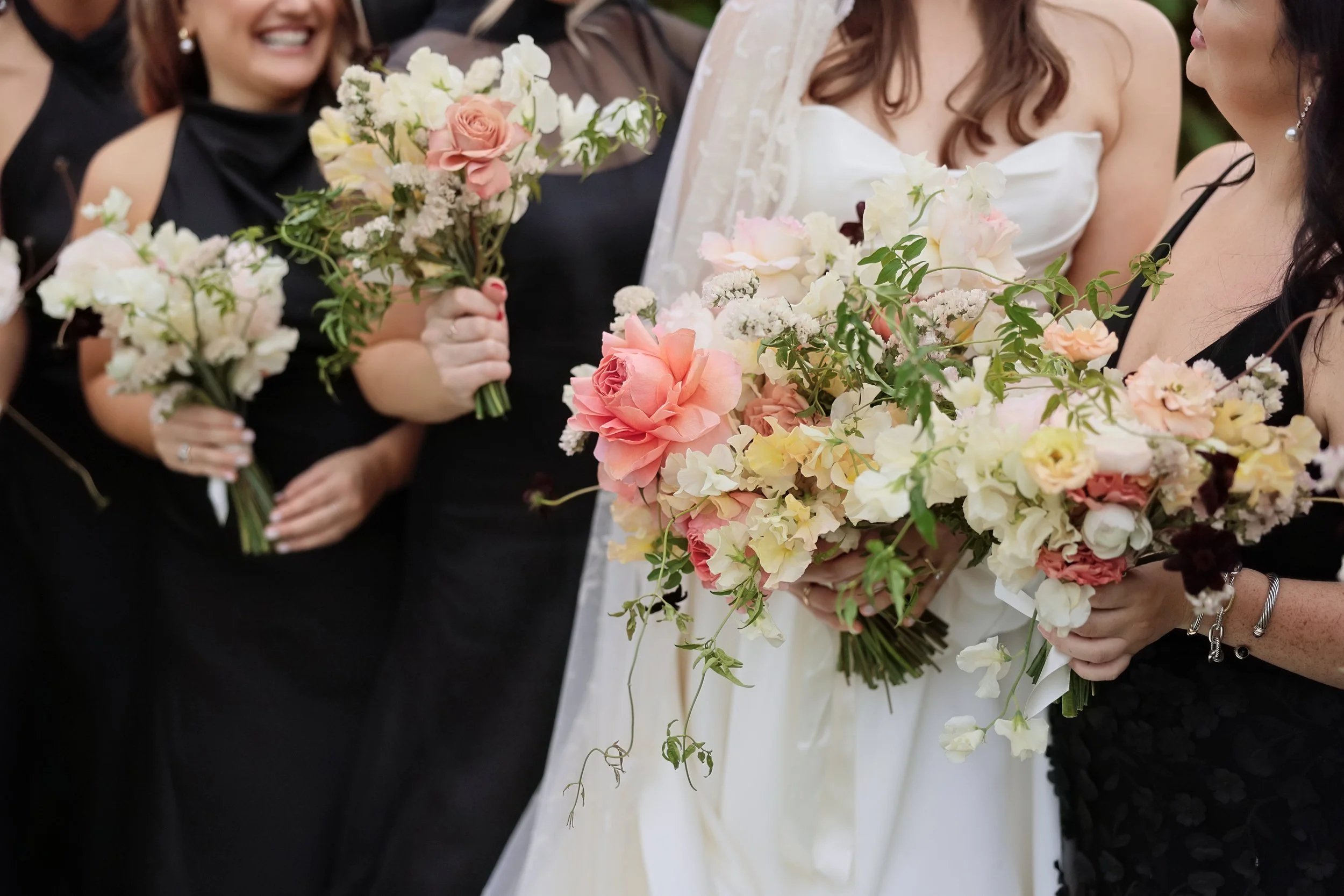
by Golden Hours.
First - Let’s talk about where we’ve been.
For most of the last five years, the dominant wedding aesthetic was defined by abundance. Lush ceremony arches overflowing with garden roses, ranunculus, and trailing smilax or Italian ruscus. Warm, earthy palettes with notes of rust, terracotta, sage, cream that layered across every surface. Pampas grass as a shorthand for effortless, bohemian romance. Dried flowers. Neutral linen everything.
It was beautiful, genuinely. And for couples who love that aesthetic, it still absolutely works. But somewhere around 2024 and 2025, a fatigue set in; both for designers and for couples who'd been pinning the same images for years. When every wedding looks like a beautifully styled editorial shoot, the individual wedding starts to disappear inside the trend.
The response to that fatigue is shaping everything happening in 2027.

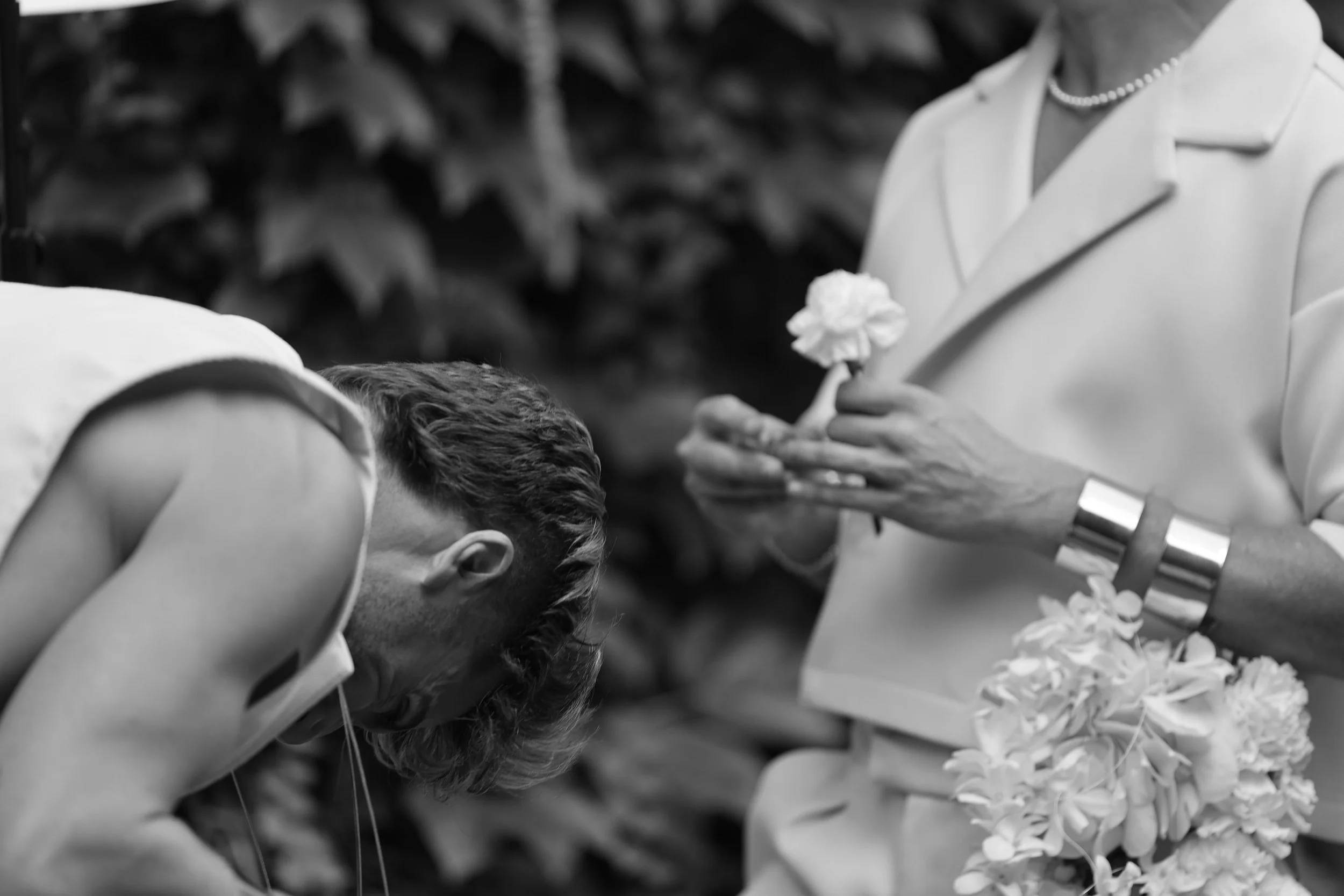
by Daniel Kim.
“The couples booking for 2027 don’t want their wedding to look like a trend. They want it to look like them.”
What's Actually Emerging for 2027
Sculptural Florals Over Abundant Ones
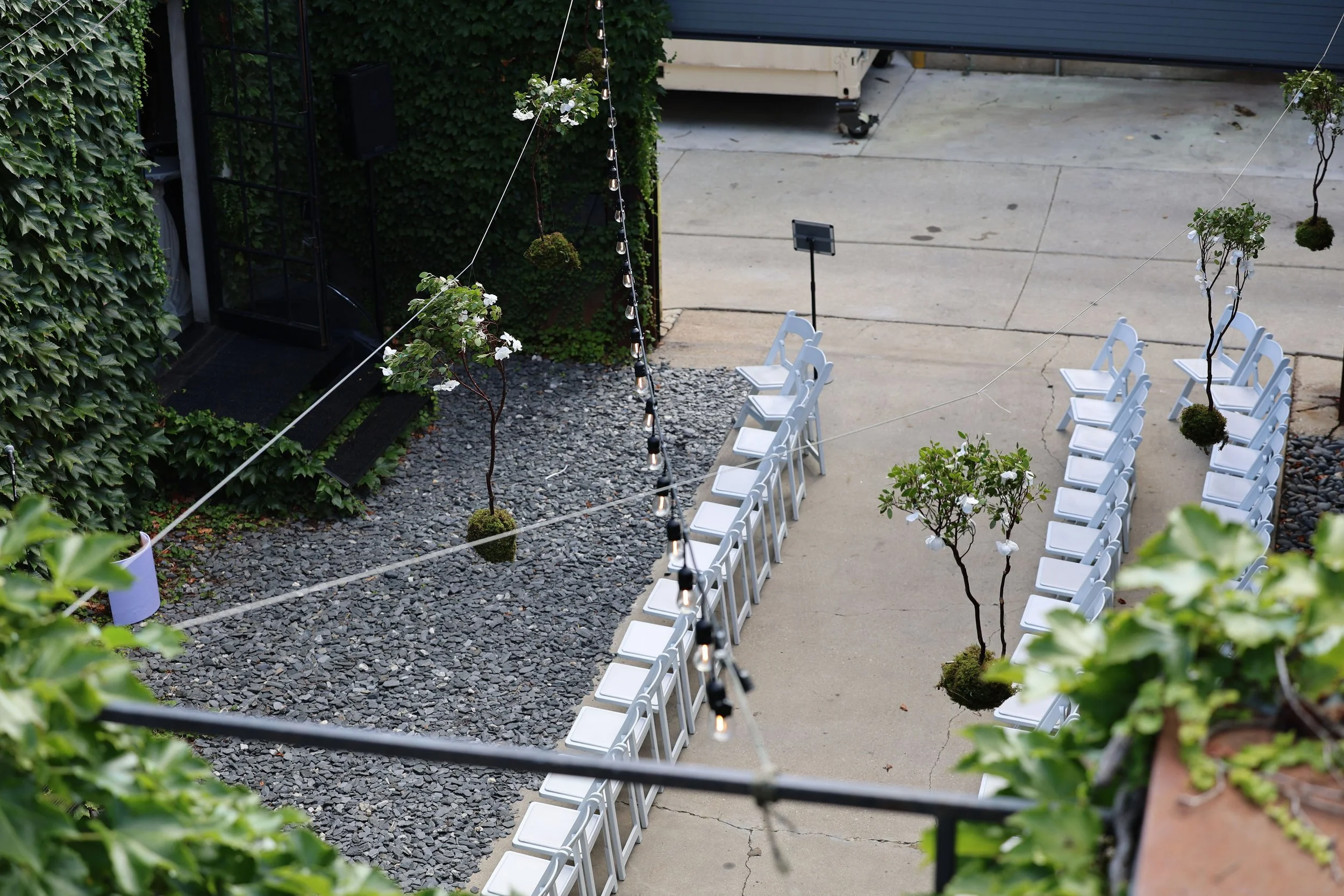
The shift I'm most excited about: florals are becoming sculptural rather than lush. Instead of arrangements designed to overflow and impress with sheer volume, 2027 couples are drawn to pieces that feel considered, architectural, and placed with purpose. A single statement installation with real artistic intention. Negative space as a design element. Florals that feel like just a piece of the larger picture, rather than the main attraction.
This is not minimalism, but discernment. It requires a very different skill set than simply piling on more. A beautifully composed, restrained arrangement is actually harder to execute than an abundant one. When every stem shows, every stem has to be right.
For florists this means nurturing our flowers better, and possibly purchasing more or higher quality stems to replace ones that naturally dwindle faster than others.
For couples, this can actually be welcome news from a budget standpoint: fewer florals, more thoughtfully placed, can create more visual impact than volume alone.
Moss, Texture, and the Living Landscape
One of the most interesting floral directions emerging for 2027 is the use of moss as a foundational element rather than a filler. Not a sprig tucked between roses, but moss as the base, the ground, the atmosphere. Think ceremony aisles with lush moss runners, installations that feel like something out of a forest floor, or tablescapes that bring the outdoors in in a way that feels genuinely wild and alive.
This is part of a broader turn toward texture forward design: lichen, branches, trailing vines, unexpected organic elements that make a floral installation feel like it grew there rather than arrived in a van. If the last five years were about garden romance, 2027 is reaching further toward something wilder and more rooted.
Incidentally, this wedding aesthetic feels similar to weddings we used to churn out between 2015-2018. Lots of greenery, texture, and wabi-sabi style designs. What sets 2027 apart from 2017 weddings, however, is the designs are rooted in artfulness over just styling flowers. Couples are looking for unique ways to tuck in these elements to their wedding that feel cohesive, under the guise of avant-garde or fine art practices. In 2017, the inspiration was more “english garden” or “ethereal”.
Color: Jewel Tones Alongside Staying Neutrals
The all neutral palette is softening, though not disappearing. What's emerging is more layered: a warm neutral foundation with layers of crisp whites, champagne, warm cream, anchored by a single rich accent color that gives the whole palette depth and drama. Emerald, deep plum, burgundy, cobalt. Terracotta and mocha are carrying over but now appearing alongside these jewel toned accents rather than standing alone.
The effect is warmer and more grown-up than the blush era, and more personal than the dried-everything moment. It also photographs beautifully against California's golden hour (which, for San Diego couples, matters).
Ceremony-Forward Design
Something I've been noticing in conversations with couples planning for 2027: much more interest in concentrating design energy at the ceremony rather than spreading it equally across the day. A truly spectacular ceremony installation // multi-piece, immersive, architectural // and then a more restrained, intimate reception. It's a smart use of budget and it prioritizes the moment that matters most emotionally: the vows themselves.
This approach also produces the most powerful photographs. The ceremony is where the real story is told. Designing it that way only makes sense.
Old-World Romance Meets Editorial Restraint
If I had to name the central tension that defines the 2027 aesthetic, it's this: deeply romantic, but not soft. There's a return to old world references by way of candlelight, rich fabrics, classical proportions. However, the flowers and decor are filtered through an editorial eye that strips away anything that feels fussy or excessive. The result is something that feels both timeless and completely current. Romantic without being precious or luxurious without being maximalist.
For florals, this translates to arrangements with strong structure and classical references (think Dutch Masters) styled with architectural restraint rather than the loose, "just-picked" quality that defined recent years.
Sustainability as Craft, Not Compromise
Eco-conscious choices have been gaining traction in the wedding industry for years, but 2027 is the year it stops feeling like a sacrifice and starts feeling like a point of pride. Locally sourced flowers, seasonal palettes, compostable and reusable mechanics, arrangements designed for donation, replanting, or gifting at the end of the night. These choices are becoming markers of taste, not limitations.
For a San Diego wedding, this is genuinely exciting. Southern California's growing seasons are extraordinary. There is no shortage of breathtaking locally grown material, and designing with what's in season here produces results that feel rooted in place in a way that imported flowers simply can't replicate.
“True luxury in 2027 isn’t measured in quantity. It’s measured in intention or in the sense that every single element was chosen for a reason.”
What this Means for your wedding
If you're planning a 2027 wedding and feeling overwhelmed by the pace at which trends move, here's the thing I want you to hold onto: the couples whose weddings I find most beautiful are never the ones who executed a trend perfectly. They're the ones who knew what mattered to them and designed around that.
There is also something to be said about looking at photographs and noticing trends, similar to how we look at our grandparents’ wedding photos and understand that formal chrysanthemums were everything in the 50s, or that chamomile and stephanotis had a choke-hold on everyone in the 60s and 70s, or trailing bouquets with mauve and whites from the 80s! There is nothing wrong with following trends! There will always be telltale signs of wedding trends peppered into your photos, and it’s so sweet to look back and see what was popular.
The 2027 shift toward intention, restraint, and personal expression is actually a tremendous gift for couples willing to engage with it honestly. It asks you to think less about what looks right and more about what feels true.
That's where a real conversation with your florist begins. Not with a mood board full of other people's weddings, but with a question: what do we actually want our guests to feel when they walk into this space? Or how do we want our photographs to feel looking back at our big day?
If you're ready to start that conversation, I'd love to hear from you. Reach out through our inquiry page — full-service floral design in Southern California varies, and we book out well ahead of peak San Diego wedding season.
If you'd like to see how these aesthetics have come to life in real weddings, our portfolio is the best place to start. And if you're planning something more intimate or working with a tighter timeline, take a look at our à la carte shop for curated, beautifully designed pieces available without a full custom package.